

Crown Thinning Versus Topping: Which Is Safer?
See how crown thinning versus topping affects tree health, storm safety, and property risk - and why skilled pruning protects Louisiana and nearby ho…
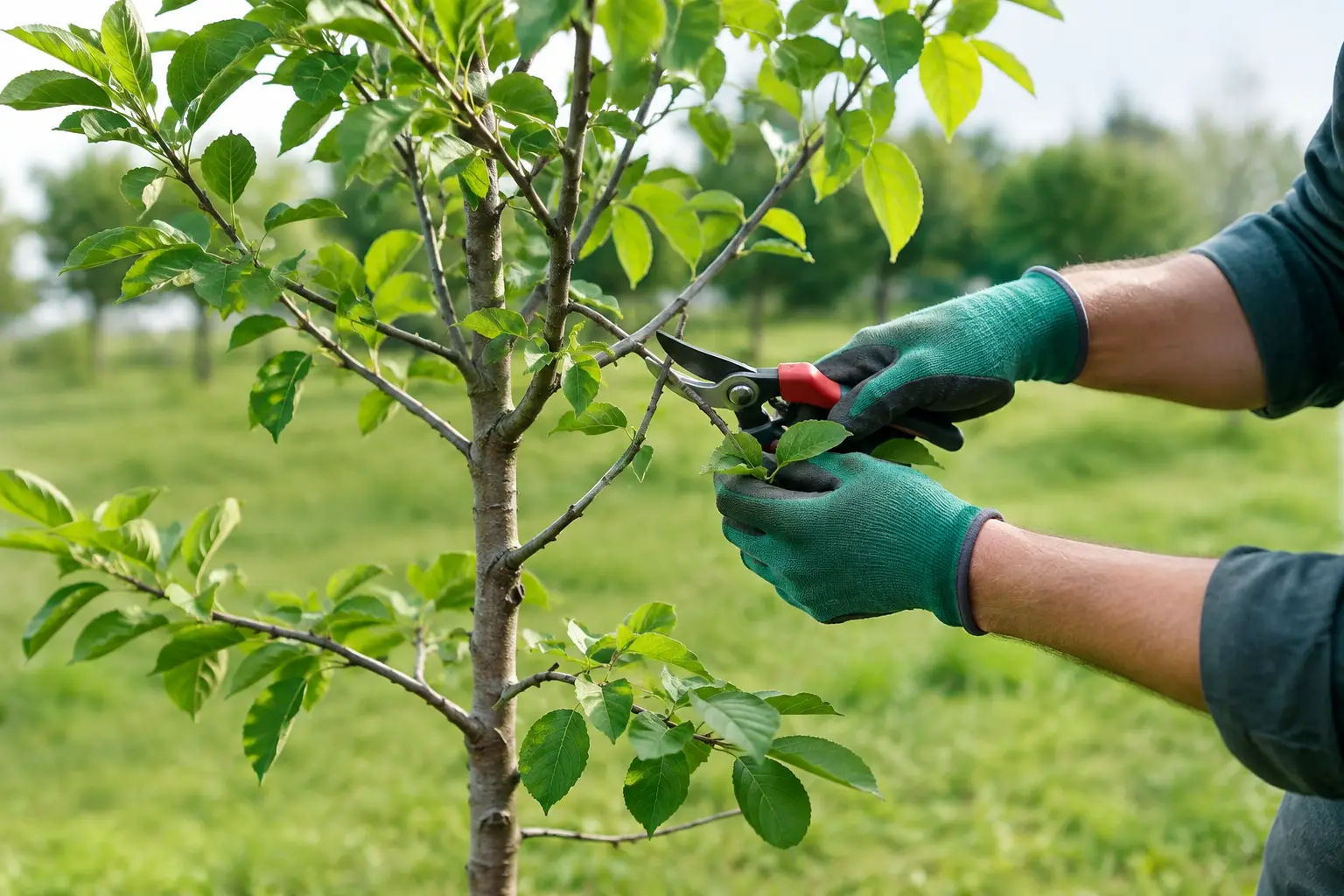
A young tree can look healthy while quietly developing the problems that lead to split trunks, low limbs, and expensive conflicts with roofs or driveways later. Knowing how to prune young trees early gives them a better framework for decades of growth. The goal is not to make a new tree look perfectly shaped overnight. It is to guide its structure with a few careful cuts while protecting its ability to grow.
For homeowners in Lafayette and across Acadiana, timing and restraint matter. Louisiana heat, heavy rain, fast-growing species, and storm exposure can push weak limbs into becoming larger property concerns quickly. A light, well-planned pruning approach can help a tree develop a strong central structure without causing unnecessary stress.
Young-tree pruning is often called training pruning because you are helping the tree establish sound branch placement. A mature tree with a poor structure can require major corrective work, cabling, or removal of large limbs. A young tree usually needs only small corrections, which heal faster and are less disruptive.
Look for one healthy, upright main stem, often called the central leader. Many shade trees benefit from a single dominant leader, especially trees planted near homes, fences, driveways, and outdoor living areas. If two upright stems are competing at the top, they can form a narrow, weak connection that may split under wind or storm weight later.
This does not mean every tree must have one straight trunk. Some ornamental trees naturally develop multiple stems and a broader form. The species, planting location, and intended clearance all affect the pruning plan. The important point is to address obvious structural weaknesses before branches become heavy.
For many deciduous trees, late winter is a practical time for structural pruning because the branch framework is easier to see before spring growth. However, the best time depends on the tree species and its condition. Dead, broken, rubbing, or hazardous branches can be removed whenever they are found.
Avoid heavy pruning during periods of extreme heat, drought stress, or immediately after planting unless there is damaged wood to remove. A newly planted tree needs its leaves to produce energy and establish roots. Removing too much canopy can slow that process.
Certain species have special timing needs. Oaks, for example, should be pruned with care and according to current local guidance because fresh wounds can attract pests that spread disease. If you are unsure about the species or notice leaf discoloration, dieback, mushrooms, cracks, or insect activity, it is wiser to have an arborist assess the tree before making cuts.
Begin by standing back several feet and looking at the entire tree. Work slowly. On a young tree, small cuts are usually more valuable than aggressive thinning.
Cut out dead, broken, diseased, or severely damaged limbs first. These branches do not contribute to the tree's structure and can create entry points for decay. If a branch is only lightly scraped but still firmly attached and growing well, it may not need removal.
Clean, sharp hand pruners work well for small twigs, while loppers may be appropriate for slightly larger branches. Disinfect tools between trees when disease is suspected. Never use dull tools that crush bark and leave ragged wounds.
Find the strongest upright stem near the top of the tree. If there is a competing leader, do not automatically remove it at the trunk. Often, reducing the competing stem by cutting it back to a smaller side branch is enough to slow it down while preserving foliage.
For a very young tree, a competing leader may be small enough for complete removal. Make the decision conservatively. Removing a large upright stem all at once can create a wound larger than necessary and leave the tree lopsided.
Branches that rub together can wear through bark as they move in wind. Choose the better-placed branch and remove or shorten the other one. Favor limbs with wide attachment angles and enough space between them.
Also look for branches growing directly toward the trunk or crossing through the center of the canopy. A young tree needs an open, balanced framework, not a crowded center where limbs press against one another.
Homeowners sometimes remove all lower branches too early because they want instant clearance for mowing or walking. Those lower limbs provide food for the tree and help the trunk develop taper, which is the gradual widening that adds strength.
Keep temporary lower branches if they are healthy and not blocking access, then shorten them lightly as the tree grows. Remove them gradually over several years as permanent clearance is needed. This is especially helpful for trees near streets, sidewalks, and driveways, where future clearance should be planned rather than forced in one season.
Cut just outside the branch collar, the slightly swollen area where a branch joins the trunk or another limb. Do not cut flush against the trunk, and do not leave a long stub. A proper cut preserves the tree's natural ability to seal over the wound.
For branches larger than about an inch or two, use the three-cut method to prevent bark tearing. Make a small undercut several inches out from the trunk, make a second cut farther out to remove the branch weight, then make the final cut just outside the branch collar. If the branch is high, large, over a structure, or near a power line, stop and call a professional crew.
A good rule for young trees is to remove no more than about 20 to 25 percent of the living canopy in a single year, and less is often better. If a tree needs extensive correction, spread the work across multiple seasons.
Avoid topping, which means cutting the upper portion of a tree back to stubs. Topping creates weak, fast-growing sprouts and can permanently damage the tree's natural structure. It may make a tree shorter for a short time, but it does not create a safer or healthier form.
Be cautious with "lion's tailing" as well. This happens when inner foliage is stripped away and leaves are left only at branch ends. The branch becomes more exposed to wind stress and sun damage. Young trees need a balanced canopy, not bare limbs with clumps of growth at the tips.
Pruning from the ground with hand tools is one thing. Working from a ladder with a saw is another. Many serious tree-care injuries happen when homeowners try to control a falling branch, work above shoulder height, or use a chainsaw from an unstable position.
Do not prune limbs near overhead utility lines. Keep people, pets, vehicles, and outdoor furniture outside the drop zone. A branch can swing, bounce, or fall in an unexpected direction, even when it looks small.
Professional help is the right call when a young tree is near a house, fence, pool area, driveway, electrical service line, or valuable landscaping. It is also appropriate when the tree has a split trunk, a major crack, a leaning stem, or a branch that cannot be reached safely from the ground. Precision pruning should improve the tree without putting your property or anyone nearby at risk.
After pruning, skip wound paint and tree sealers unless a qualified professional recommends a specific treatment. Trees respond best when proper cuts are allowed to seal naturally. Water the tree during dry periods, maintain a mulch ring without piling mulch against the trunk, and watch for new growth.
A young tree does not need to be reshaped every few months. A quick annual inspection is usually enough to catch competing leaders, rubbing limbs, and clearance issues while the wood is still small. For fast-growing trees or trees exposed to strong winds, more frequent professional guidance may make sense.
The best young-tree pruning is almost invisible a few years later. The tree simply looks balanced, grows with confidence, and has the structure to stand up to the weather and daily demands of your property.

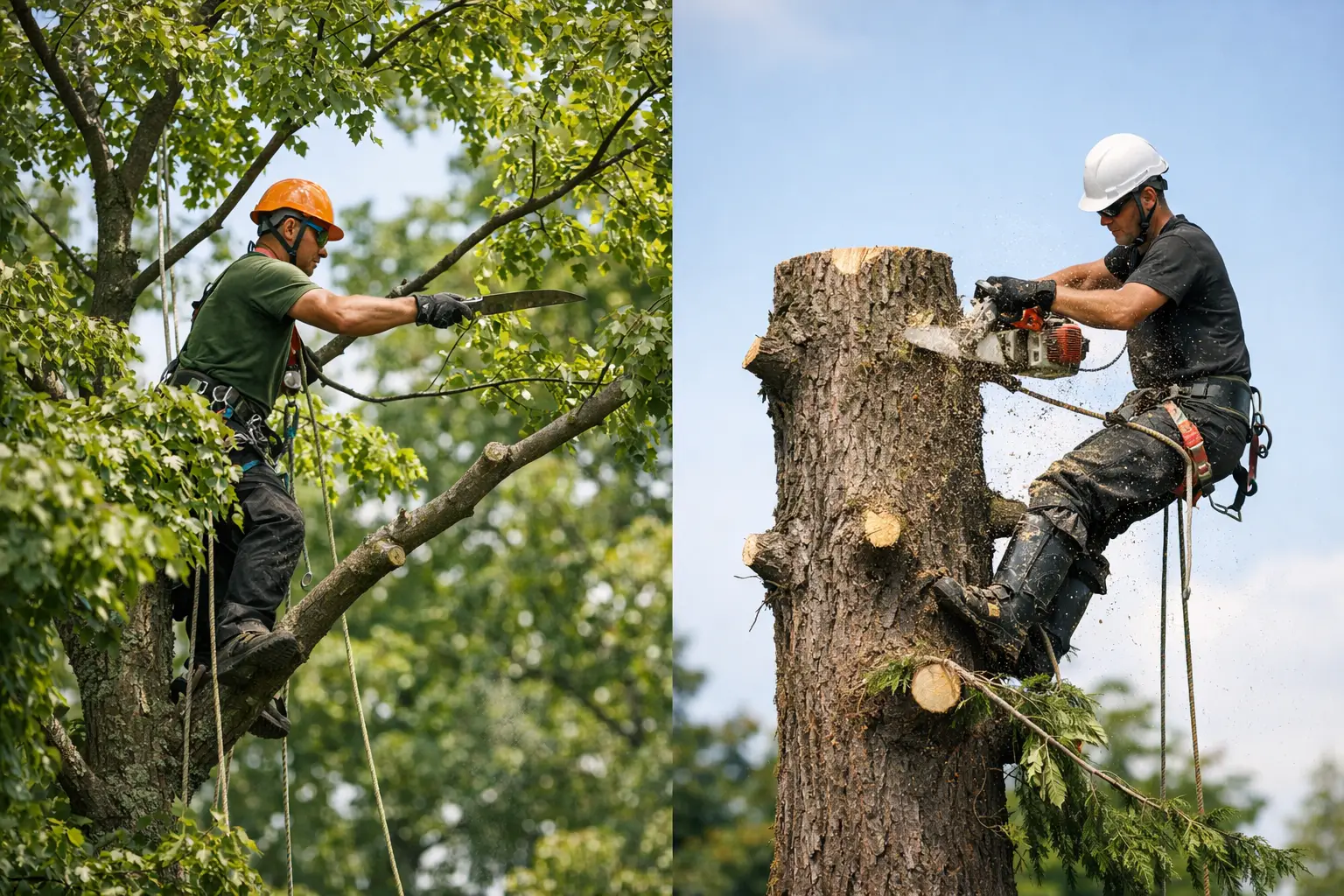
See how crown thinning versus topping affects tree health, storm safety, and property risk - and why skilled pruning protects Louisiana and nearby ho…
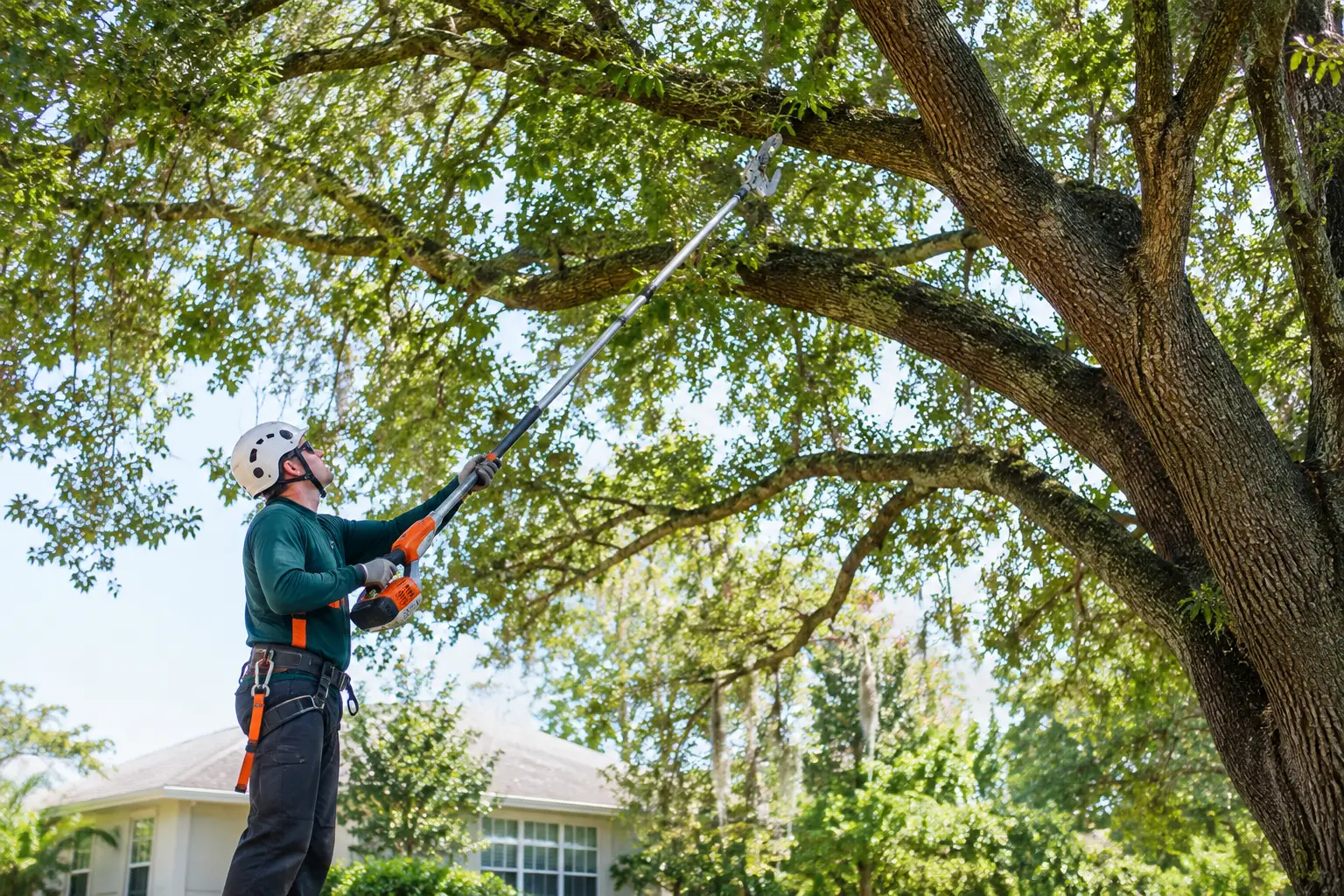
Live oak trimming protects your Lafayette yard from low limbs, roof damage, and storm hazards while preserving the tree's natural strength and shade…
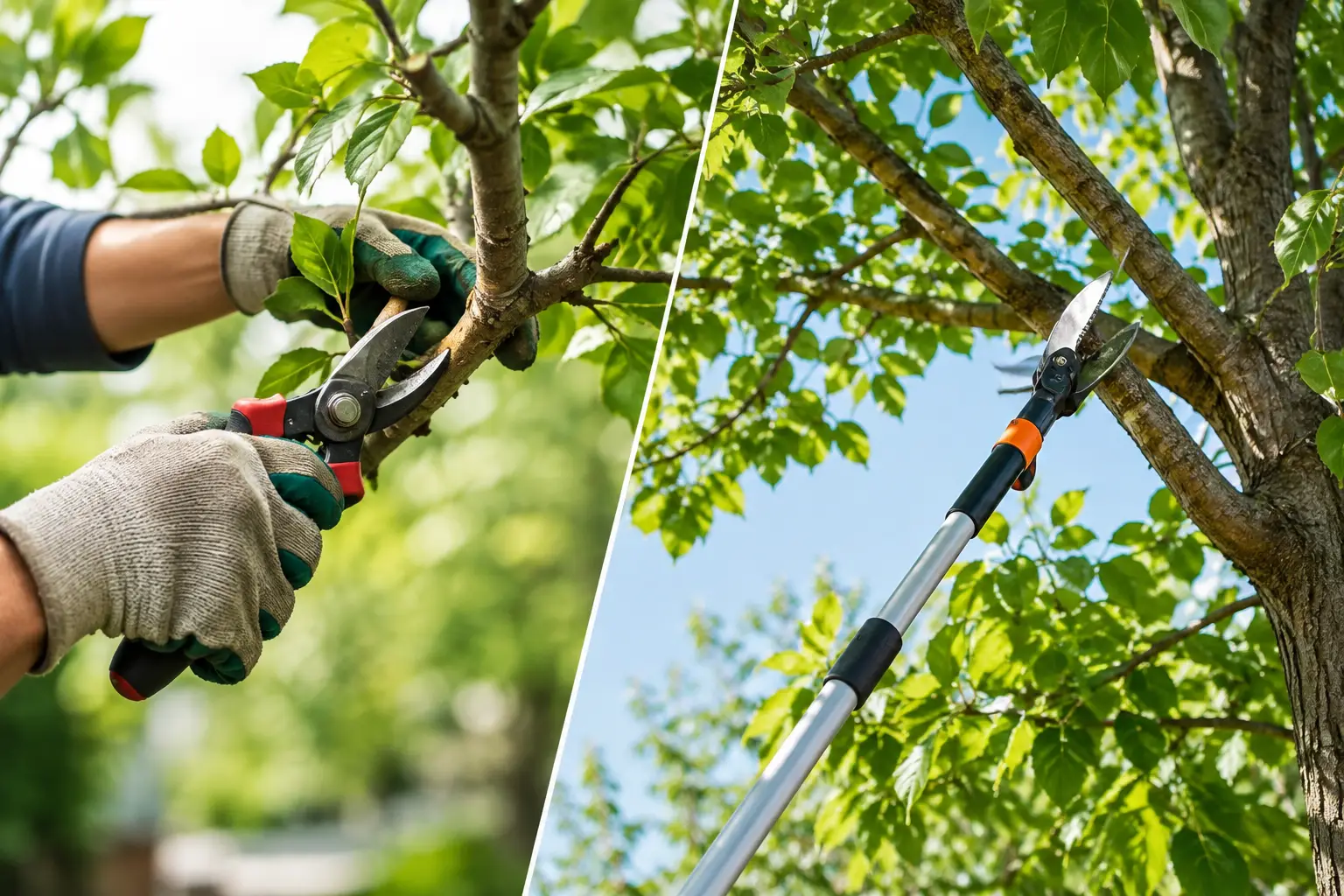
Learn pruning versus tree trimming, when each service protects your Louisiana property, and why professional timing prevents damage and costly repair…
Tell us about your trees and we'll get back to you, usually the same day.
“They were prompt for the actual survey and gave a fair estimate. Crew showed up and did the job ahead of planned date and did an amazing job.”
Loading the quote form…
Form not showing? Open the quote form or call (337) 568-2739.
Get a free, no-obligation estimate from Lafayette's locally owned tree service.